Conversation with the In-Laws
WTBL (00:00)
Hey, welcome to WTBL, Walking the Blue Line. We're having conversations about law enforcement. This show is dedicated to members of law enforcement. We will preview various cases that have been investigated, murders and mayhem that happens out there, as well as we want to talk about some of the issues. And so we are honored
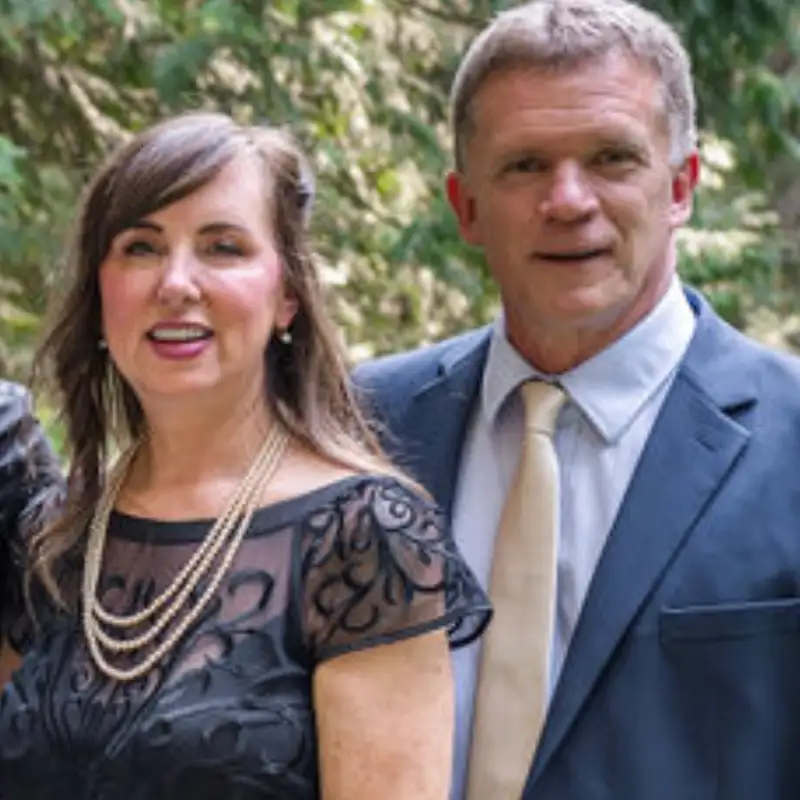
some guests for the first time on our podcast and these are the parents of our son-in-law, Drew Helsper. This is Sue and Kurt Helsper and welcome to our show. Thanks for having us. All right. So we wanted to have some conversations about how you feel about life and law enforcement for your son, as well as maybe any effects that it's had, you know, in your family. So I guess my first question is, do either of you have family members that were in law enforcement before?
⁓ No, no family members friends that I grew up with Became law enforcement. There's a chief that I grew up with he's chief over in Anaconda bill Sather he's over there, but other than that no family members
No, me neither, no. So this is all kind of new in what you're experiencing and hearing the training that he goes through and. I imagine Anaconda is a little different than Spokane too. Very much different. Very much different. Well, you grew up in the Anaconda area and I actually grew up just a short distance from there in the Deer Lodge. I don't know, I think Anaconda was a little larger population, maybe like a couple.
thousand more correct your logic correct but nothing compared to I mean there's almost as many people in Spokane County as there was in the whole state of Montana I look at the headlines the type of crime that's going on over there really
much less of it, maybe not per capita, but it doesn't happen as frequently, but still the same stuff. And we have a niece who's married to a man who's actually a police officer in Anaconda right now. Really?
Dan Beasley. And her name is Kara. so law enforcement aspect of it is kind of a little bit new. I mean, just jumping right into it then. So.
When drew came home and told you he was interested in law enforcement or becoming a cop. What did you think? Well first drew really did not tell us that he was going to become a cop. He was working on he had some exercises that he had to do timing things that he had to do and then one day he came over to visit us and he said
I have to go and I said, where are you going? He goes, I have a polygraph test that I got to get to. And that's when he looked at us like, ⁓ man, I messed up. I just go, Drew, are you going to become a cop? And he goes, yeah. He goes, thinking about it. So what was his career? He was on a career path and it wasn't bad. No, he was in college.
He was going to go for... Environmental science is what he's striving for in his degree. Yeah, basically it was environmental But I think there was a little bit influence from his potential father-in-law.
aka Lyle. Yeah, there was. And his girlfriend. And I think his potential father-in-law said, don't tell your parents. That's right. No, it's kind of the story that I say. When he met Dallace, he was driving a bright orange Dodge Dart, and he had a full hawk. soccer. He was playing soccer. He was playing soccer.
you know, once he met Dallace, you know, true cowgirl. Did he turn into like the guy from Yellowstone? Yeah, ⁓ definitely. His outward appearance changed. His hair got a lot longer. He started growing facial hair and you know, and then the Dodge start became a Toyota Tacoma. But yes, he.
No, he hid it from us for a little bit. We were kind of putting things together, you know, going, think this is the direction that he's probably going to go. We just made sure that, you know, he was going to stick with the college thing, which he did. I think he's taken every class known to North Idaho College, so he should have his own wing named after him. And then he pursued environmental science, which he's still a full-time student today.
So yeah, I one of my biggest regrets about their wedding was when it came my turn to talk was You forgot the whole story about the keys because he came over and he lost his car keys and it just
met this kid who drove an orange dart and was riding a skateboard and it was like when Dallace... you sure this is the guy for you?
That was a huge regret on my part was like I could have shared that with the whole everybody. I lost it. You know, I lost it. That's I had a lot more to say, but I made the mistake of looking at those two. And that's when I thought, okay, I'm done. I think I cried many times.
Well, I have to tell you it was a surprise to me actually it was a surprise to me as well that when he decided to go into law enforcement. It's like a switch went off I thought. Yeah. He was on his path and all of sudden he saw Dallace what she was doing and he's like no I'm doing that and it was like. Yeah. And so. That's how it seemed to me.
So, yeah, I think he applied before I was aware as well. So you can't blame my influence on other. I gotta say, I was...
Yeah, I was honored, you know, because I saw, ⁓ man, you know, he respects what I'm doing and that kind of thing. But I think he's risen to the occasion, actually. He seems like he's very happy and he looks, I he's good at it.
So he he tells you that he's got a polygraph and he realizes he spilled the beans So do you guys have any follow-up conversations after that? I think a little bit we did have a little bit I at first I was not thrilled about it Just with everything that's going on with today's day and age with all the drugs and all the guns and everything that's happening Let alone have it be in Spokane
You know, I would have felt a lot more comfortable if he said that he was going to be at Kootenai because Kootenai, he knows Kootenai. He did not know Spokane at the time. He grew up at Kootenai County, so I felt more comfortable there. And it just seemed like the crime was less at Kootenai. So.
But it was a direction that we had to respect. I mean, if we didn't like it, he knew a little bit about it. His brother Scott did tell him that he was not happy about it. He was not thrilled and Drew's uncle Bill was not happy about it. Bill called Drew and told him that he was not happy about it, but he respected him.
You know, the decision that he made. Well, and I guess that was that was going to be my follow up is like, you know, obviously, does the family have some kind of reaction and is that reaction because of how dangerous they perceive it to be? Or is it, know, some other reason why they're not know how dangerous they perceive it to be? And Drew the way Drew.
We figure Drew was going to be a salesman growing up. know, Drew can sell, you know, ice to the Eskimos, you know, and.
And it's just basically the perception, because Drew was just ⁓ a good kid, honest kid, wanted to make everybody happy and make everybody laugh. So they were worried, and they are worried about Drew's personality changing a little bit. And we are too. And I've always told Drew, even when he was into this, I told him,
You need to contact your mother at least once a week if not show up I go because sue has a tenancy and understands she can bring drew down to drewland, you know Or they're joking. They're having a good time drew kind of forgets about a little bit, right? So Yeah, well I have to say being the mom of Dallace I felt the same way when she came home and said I want to be a cop i'm like, no you don't
And mean, I had lived with Lyle, you know, for 30 years and I was like, I don't want our daughter to be a cop, but I mean, she's good at it too. It scares me. mean, I was worried with, you know, being the wife of a deputy. So I understand how you guys feel. I mean, I do think they're both, you know, I commend them and they seem like they're really doing well, but it is not right.
I wanted to be a cop since I was like in fourth grade and a buddy of mine, we did everything along that line. So going through high school, I knew this was the direction I was headed, started looking for colleges. And looking back on it, I mean, the police were perceived so differently, I think, in the eighties, seventies and eighties where
You know, there was a lot of civil unrest during the 60s, but coming into the 70s, think everybody started looking at the police as the protectors again, and in the 80s, and colleges were starting to host more more criminal justice programs. It was easier to find.
And so I looked at a college in almost in North Dakota or North Idaho College for Criminal Justice. I came over here and got hired and was like everyone was super supportive except for maybe I don't think my father was very happy about it. And even when I graduated and got
hired by Spokane County, was very much like, well, I thought you were coming back to Montana. So I think he was more upset that I stayed out here than. And he never really, we never did get back. Right, never did make it back to Montana.
rest of my family besides my father had some involvement in corrections, wanting to stay in or... Most of the family, your mom and your sister and now her kids and her husband, they all work at the prison. They're in Deer Lodge. Right. So from that side of the family, I think there was a bit of encouragement and pride that, yeah, you're going on to do this. It wasn't looked at to...
unfavorably compared to knowing the difference of how the police were looked at back then to now, where nowadays most of the colleges are disbanding their criminal justice program. SEC has gotten rid of theirs. I don't know if NIC has gotten rid of theirs, but I think they did, or they're getting rid of it.
So there aren't as many criminal justice programs out there. The public view of it, I mean you go on social media today and you see all of these. All the bad stuff. seems like. I hardly ever see anything good. Every once in a while. So it definitely worried us as well. I mean not only just because we're parents, but I do feel like I got out of that role.
good time in history versus the way they've changed some of the laws and the civil liabilities and things like that that weren't there when I was doing it. they certainly want to encourage them, I guess, in terms of people that might listen to this. It's still very respectable and I hope that...
You know, people will still seek out that as a career, but you have to go into it with your eyes wide open as to the things that you might be facing. did the two of you have some behind the scenes conversations about his choice and how you felt?
A little bit. know, I think yes, yes, we did. You know, I think a lot of it is is obviously the stress that that I, you know, I pass it out. I wear it on my sleeve. Sue pretty much keeps it in. So not sure what, you know, I am honest and open because I'm just going to let it all out. Sue kind of keeps it in a little bit. But we had.
We definitely had some conversations and going which direction do we would we like Drew to go, you know, or would we have liked him to go.
And you know, we, the agreement still is that he still get his degree. You know, if he wants to pursue being ⁓ a deputy for the next 36 years, then by all means. But it did cost him inside Yeah, we just didn't see, I mean, we have known Drew, of course, since he was born.
And we just, only know police and law enforcement from the movies and from the cheesy shows that are on. We don't know. I just didn't see that in Drew. Drew's personality is just.
Yeah, he just I just didn't see it in him. And so I, I think and I was going to mention that this book that they gave us during the Academy, which, by the way, I think they do such an amazing job of including families or just wanting families to understand or I don't know, they just brought us in from the beginning from day one till the graduation.
I don't know why. don't know if they just think we're going to go half cocked at any moment. I don't know. But they kept us involved. And they gave us these books. And one of the books was written by this psychiatrist named Kirschman. And he wrote, I Love a Cop. And it talks about, it was originally written in 1999. And then it was
revised for today's climate because it is so different than 1999 even. And a couple of things that he talked about was, well obviously, Drew's exposure to violence and...
When you have a young brain, which I feel like Drew is really young in my eyes, I just...
I mean, he played a lot of violent video games, like I needed him to, I really felt like, are you sure? Do you understand that if you get shot, you don't get to go to level three? You don't like you're done. Right? You're not, it's not, it's not, you know, single player. Well, that's what I was concerned about. Yeah. With the movies and that they think they could do something like this. So when you see them and they got the guns and
They're blowing everybody away in those games. Yes, and so I'm like, OK, does he get, like, do you get this? And so he talked about that. And he also talked about emotional detachment. So I.
I just think that Drew is just such an amazing person and I was just so afraid that he would lose what I really find special about him in that he's very emotionally attached, not detached. And, you know, we're both in the medical field and when we see people get hurt, don't necessarily, we're not empaths necessarily to that because we've seen it all and I didn't, I feel kind of sort of bad about that.
But I remember Drew experiencing a horrible event with a child. Horrible, horrible, horrible. And he called me and he said that he had experienced this horrible event. And he goes, honestly, I'm not feeling anything. I'm like, oh my gosh, I read about this. I got to go with this book. He's saying this to me. He doesn't feel any. goes, mom, I don't feel anything. What's wrong with me? And I'm like.
I don't think there's anything wrong with you. think you just did your job. You just went with what they told you to do and you just did it. But in the back of my head, I'm like, okay, know, this is already starting. Like, what are we doing here? Like, what is happening here? And I think that was just his newness to those experiences. And so...
I do feel like he's doing a really good job and I do actually see him, you know, he's got the uniform and he's got all this stuff on so he kind of looks the part now. But I feel like he was, I just feel like he was really well trained. I feel like he was really well trained and I feel like, I feel confident that he,
knows how to keep himself out of danger is my feeling. It is amazing how much training they go through. I don't think the public understands. It's almost an entire year before they're even put in a car and then when they're put in a car they're still with an FTO and but talk it listen to you I Dallace went through that too that same thing where she goes
I experienced this really horrible thing and everyone kept asking me are you okay? Yeah, and so I was worried too. I was like, my gosh, you know, why don't you feel this? Are you in shock? Yeah Dallace has always probably been a little bit less of an emotional person than some of our we had three girls and so the other two were more emotional and
It's just their personalities, but I think Dallace handles it better. Better than I would, I know. Yeah, yeah, I mean, I would be crying. I think one of the things that impresses me about what you were just talking about is the fact that he actually called you and said, hey, I saw this. What's wrong with me? I mean, he's questioning. He's at least thinking it through because.
I can say that's an improvement with the generation that's being trained now and such is they actually are encouraged even through the academy and such to examine their feelings. When I went through and I'm sure all of the ages long before that, feelings were never a part of it. It was like, here's the law, you do this job and you go home.
I have watched over my career them get better and better about being concerned about what the officers are seeing and actually putting some support networks in place for them. for instance, Spokane County has what they call a peer team. It's basically a team that looks out for the officers whenever they're involved in a really traumatic event, especially like officer involved shootings and those kinds of things where they may have had to take somebody
life they immediately when they call the detectives out to start investigating they call the peer team out and somebody from that peer team stays with that officer to give them emotional support that was something that never happened
20 years ago. Yeah, I don't know. I don't know if it's a good thing I mean is it better to be completely Do your job and don't think about it if nobody talks about it just kind of goes away. I don't know no, I don't think because Now they have yearly conferences in this area It's a first responders conference and it basically is all about
emotional survival.
targeted mostly on law enforcement but you get a lot of the medical people that come in there that are constantly responding to traffic accidents and you get firemen and they have these speakers come in that have actually gone through it and so I know a couple of the most powerful speakers I saw were guys that one guy he had been over in Afghanistan in direct combat you know and he had
been responsible for taking people's lives and he had seen his partners get killed over there, you know, so he'd been through all of this horrible trauma. But he was in the reserves of the guards, so mean that was part of what he did. He spent time over in Afghanistan and then he comes back here and he goes back to work at the police department.
I mean the way that they train them now
positive atmosphere they're putting out there and the fact that he would call his mom and He talks there's no end of that We know that but I yeah, I mean I was I hope he continues to do that because I think sometimes you you don't know if other people want to hear the same story over and over and over and he doesn't he's aware of that as well and so I
Once he opens up, we let him go. We just let him go. His first day with his FTO on his first three hours, he had his gun drawn.
And he's like, God, dad goes, I thought I was gonna have to shoot this guy on my first day. I was like, don't tell your mother. Yeah, I mean, it is is dangerous work. There is no there is no doubt about it. That story, too. And I think we should mention Drew started off at the city and now he's with the county and he seems much happier at the street. Yeah, way happier. Yeah. Yeah. I have to say, downtown Spokane.
and if you've never experienced it, it's a change. Like you said, from Kootenay to, it's just a whole, almost a whole other world out there. I think his frustration and, you know, and I don't know, is some of it, you know, Washington state law, you know, where he arrests a guy and when Dallace was up at working at the jail as a corrections officer, you know, Drew would arrest somebody, bring them up.
And that same person would be waving to Drew three hours later back downtown. And that was very frustrating for him. You know, very frustrating. It was frustrating for Dallace too. Why are we even taking this guy in? know you're going to just dumping back out on the streets in a hours. There was a.
Post on Facebook from the Sheriff's Office about that very issue just today and basically what they did was they went through and listed I don't know how many I think 10 or 15 various offenders to make the point is like hey, we're arresting these people but they're back out so each person that they listed, you know, they talked about well, this is the most recent crime they got booked into the jail and they got released and this was their 47th booking
for the year or this was their 30th booking in the last two years or something like that. And yeah, I mean, it is just a simple catch and release system. I know definitely that was one of the things that made Dallace want to get out of the jail. Yeah. A useless time if she's, it's hard to do your job if it's.
Yeah, and a lot of that is Washington state law exactly like said part of the reason why I was kind glad that I got out of the time I did because around the year that I retired they changed a number of the laws in terms of like how you can go about questioning and what you can arrest someone for
Yeah, it just becomes frustrating to try. And that's all a shift. I think that like everything, know, you see a pendulum swing each direction and you know, at one point it'll go one way. So right now we're in a swing to the left where they're loosening all these laws, they're instituting all these protections.
People will get tired of it and all of sudden you'll see this, but it just takes sometimes decades for it to happen. I've seen a number of changes during my career that have gone both directions, so I don't know, we'll see.
Any of the topics that you guys would like to bring up? Drew and Dallace spent some time away, you know, from work and they ended up going to Georgia. And one thing that really I remembered what Drew talked about, goes, when he spent that time away, he had no idea.
you know that it was after about the third or fourth day, he could just feel everything kind of relax in him. He said, I had no idea how long I actually was. He goes, I needed that. It sounded like Dallace definitely was in the same boat. Right. Well, I Drew's really done Drew and Dallace because we've gotten into it and Dallace doesn't like it when we start really, you know, getting
debates going and and because you Dallace is very. And. And drew has always liked to he processes things out his mouth so we get into these things. And they have really educated us on. Many things that I did not know now I've always been. I have always been pro cop of course I mean.
They're always there if we need them, right? Everybody calls them when we're in trouble. But I don't think, I don't really feel like the public really, I have learned, so I can't blame them. I am part of the public. But I don't think we really, really understand how much...
danger and and the need for them to protect themselves accounts for things that they do that we don't understand so I mean I
I'm surprised I'm still alive actually because I didn't know a lot of things. they, you know, just, just having a knife out, I, this is, I want this podcast to go worldwide in this country. If you have a knife out, you can get shot. And I'm like, Drew, cause I have a friend, actually we do have a friend who's a cop. And I called her when,
This man was having a crisis, having a mental crisis. And I called Carrie and I said, OK, why were there seven policemen surrounding this man with a knife? Like, I need you to help me understand this, because I'm not. This was before Drew. I'm not understanding this because I'm, you know, I was one of those people. And she said, well, Sue, he's got a knife. That's dangerous. He can hurt them. And I'm like.
They put like nine bullets into the guy.
She kind of calmed me down and Drew really said, he said, look, mom, this isn't, we're not set up like a football team. When we go to a call, we're not discussing the plan. We're told how to handle it individually. I mean, there's a sense of where everyone's at and there's a sense of certain people have certain types of moves or certain types of jobs or certain types of coverage, but they're going to protect every police
officer is there to protect themselves and everybody else. So that's why there might be times in which a person, it looks aggressive to us. Or too much one-sided. Too much. But I'm like, yeah, after he told me that, I'm like, OK, this makes perfect sense.
We would wear Dallace and Drew and I didn't mean to take it off. We were like, why didn't they just shoot him in the leg? Yes, that's what I always thought. that's where Drew and Dallace, thought we're going to push our together. on blue. But they educated us on that. That that's, you know, just a really hard. They're not they're not perfect. You know, they're still humans. Yeah, they're trying to stop a crime and stop, you know, protect and and I think it's also
So
when you're, not to cut you off, but when you're home and you're watching TV and you're in your comfy chair and you're like, I can't believe they did that. Why did they do that? But when you're, I was kind of like that when I met Lyle. I didn't like cops. I mean, I didn't hate them, but it's like, I don't want to get a ticket or anything like that. I don't want to be pulled over, you know? And so, but being with him and I would ride along with him and wow.
I just go, that's why they do that, you know? And it's really easy to make decisions like, that's just overkill. But when you're out there in the car and it's just you and them and you don't know what they're gonna do and you don't know what they have on them. And yeah, it really opened my eyes. I was like, ⁓ okay, I get it. Yeah. So you went on ride alongs with Lyle? I did. Now, will you go with Dallace?
Yeah, he's going to. They're already talking about it. Yeah, I won't. I won't. I told Drew. I said, you're going to go on a ride along and I said, no, Drew, I said, not unless I can pack and he goes, Dad, you can't. I'll get fired. And I go, well, then let me have the key or whatever to the AR or the shotgun. I go because.
I go, if I see my son's in trouble, the parent's gonna wanna do something. And I said, maybe your mother might go. And I don't know if they've gotten different instructions from the days when I were.
But I would always bring people along my dad went out ⁓ Yvonne went several times that I had those thoughts I'm like because one time I was out there and he's chasing this guy around the house and I'm like But he asked me would you ride with Dallace and I said no, I don't I don't think I want to ride with Dallace as a mom and my daughter I mean
I'm the wimpy little girl, Dallace is like a badass out there. And I'm like, God, save her please. I would want to react and that would be a wrong thing. would, your kid end up bad for everybody. And on the unemployed. I don't want to affect his decision-making. I don't want him to go, because Drew does tend to.
worry about who's looking at him like I wouldn't want him to do something differently. I don't know would he, if I was there I don't know. No because I think you would know that you're gonna stay put in that car. I'm gonna be on the floorboard.
I always enjoyed well, I'm more of a teacher by nature because like I Yeah, I taught college classes and I was a field training officer for a while and it was just something like I always wanted to educate people about what we do and how we do it so I would bring anybody and everybody along for a ride along that wanted to go well when I went with him I have to say most of the time that I went with him it was kind of fun
Right. That was once or twice where, yeah, I'm like white knuckling it or whatever. But most of the time we had fun and we would get in pursuit. They can't really do that much anymore. Yeah, they can't pursue like we used to. And yeah, almost every time she came along, we would get in the pursuit. But, so.
you would perceive it there. I guess it depends on the knife though. Or maybe you should go so then you know what's going on. I don't know. Oh, I know what's going on. I have an idea. But like I said, if it's something that I see him, something happening to him, I'm going to want to react. again, like I should. I used to show everyone at the beginning of the shift. This is how you unlock the.
shotgun this is how you unlock the rifle and this is how you get on the radio so if I'm out of the traffic stop and things go bad and I would never tell them to protect me I would say if someone comes at you and you have to protect yourself this is how you get the shotgun this is how you get the rifle and this is how you get on the radio I'm all in then let's do this let's go you know and and I would give them
Basically those three instructions for the most part they were told, you know, you've really got if we get off of the traffic stop You don't get out unless I tell you, you know, if we go into some place I'll tell you if you can come along with me or not Otherwise, you just kind of get to sit here and watch what happens These are the basics of how you protect yourself
And now granted, I haven't been in patrol for a long time, so I don't know if they've gotten some instructions to do Or Drew said we can't touch anything. I couldn't even turn the light on. He knows we're going to mess with We couldn't even, there's like a big light on that. What's this button? Yeah, exactly. and there are so many buttons now.
looks like an airplane cockpit. Well, it's way different now. They got computers in their cars. I will say when I rode along, the thing that bothered me the most, the radio. First off, I didn't know what they were saying because a lot of it's in code and it's just constant just all night long. I was like, does it ever go quiet? I know Drew was nervous about that, but then now it's. yeah. I think Dallace was a little nervous.
to missing something or... Yeah. You get used to it and I would drive her even more nuts because I liked to listen to the AM talk radio. you're to that and radio. And the okay. Because when a call would come out or just the way they address it, mean, you just subconsciously are kind of listening for those little keywords that are going to tell you, hey, this is something important for me, you know, but...
Back then, like everybody in the county was pretty much on one channel and a majority of the time, it was for somebody that was way up north, way away from where I was working. So it would be for out west or up north or maybe the other end of the valley where, and it was a low priority call and I could just ignore all that stuff.
So a lot of the time, know, it was a quiet night and I'd be listening to AM talk radio and waiting for a radio call to come in or something or looking for something to do. And so having the two radios going drove her absolutely. And then trying to carry on a conversation besides that, you know. I do remember. man, I don't know. I couldn't do the job. I'd lose my mind. But I do remember saying one time, was like, I would have gotten one.
Really you had a boring Halloween night
Have you spoken to Dallace and Drew in the last week or so? No, I don't think I have because it's been pretty crazy, They said that's one of the most busiest for the need of protection. Drew said Halloween wasn't that bad. He said there was a lot of calls, but... We don't know, it might be fibbing to us. Well, mean, every day actually, they never know sometimes what... It's true.
because I think for me that was one of the biggest learning curves when I was young was I felt like I was in control of life and everything that I wanted had gone to plan. You know, I graduated high school, I decided I was going to military. I got the career that I wanted.
went to the school, got out, started college, you know, and everything was just going according to plan. And so you kind of have this sense of like, well, this is what I'm going to do and it'll happen, you know, or I can make it happen. And then you get a job like this where every single day is different and you never know what the next phone, you know, radio call is going to be. sometimes that's because somebody died, you know, and they didn't wake up that morning thinking they were going to die that day or something. You just all of sudden realize,
how life turns on a dime. There's also the aspect of the paperwork. don't know if you guys have been let... When they do one or two calls or... They'll have hours and hours of paperwork.
I think they still do have a ton of paperwork, but I think it's gotten better with the advent of computers because back then everything was handwritten. And so now, like some of those guys have what they call boilerplate language where they can just copy and paste it and then they can fill in the names and some of it goes a little faster, but.
And Drew's had a few of those. He tells us he'll certain parking spot. He'll do paperwork.
Yeah, because the legal system has gotten yeah, so you know what they need what the lawyers need what if he doesn't say the right thing if he doesn't mention some Detail then that can mess up somebody's case and so And that's kind of one of my you know one of my concerns is How much protection do these police officers? deputies have
You know, because with social media, you know, all the cell phones coming out. But they always usually come out at the retaliatory stage, you know, they never film what caused the police officer to draw his gun or take the shot or whatever. And and that's kind of that's one of my concern, because it's like there's potential, there's potential.
for these young kids to end up going to jail. Exactly. Well then it's happened. There's been several officers and they have gone to jail. And just the angle or you like you say they don't start recording until the one part that looks really bad. Right. And then yeah it scares me too because everybody's got a phone anymore.
so you guys he's been into this over a year so if you have friends who had a child that was thinking about getting into law enforcement what advice would you give them?
Talk to your parents. Be honest and upfront. But then, I mean, was somebody like Drew? I would tell them to talk to Drew. Have a sit down, because I think Drew would be open, honest. This is what it's like, especially this day and age. I mean, because even if if we sat the kid to you.
You know, you would come at them with a different perspective than Drew or Dallace would right now, you know, because of just everything that's going on. And they're out in middle of it. You know, and I mean, yeah. Well, would you encourage if you had just met Drew and Drew said.
Hey, Mr. Johnston, what do you think about me being a cop knowing Drew? Would you have gone? You're perfect. OK, we're we're on. This is being recorded. Yeah, but they can edit it. I mean, you'll hear I'm perfect. Yeah. No, I'm.
I think that's an unfortunate part is that I really enjoyed my career. I liked what I did and I have a hard time but I probably don't really encourage anyone to get into it at this point. I know I tried talking Dallace out of it. She and I, Yvonne and I had.
numerous conversations when Dallace said this is what I want to do and she was gonna first go to the jail. I think that was maybe my input though. I was really scared for her and I didn't want her to be out in the car and so I'm like well... Well just to her small stature she's a small...
she's not big well but she's strong she is strong she is very very strong i think yvonne sorry but i just want to put out i mean i think really though your reasoning for not wanting her to go do this
All of those things aside was how hard it is on the family life. It is it is hard because they're most likely going to work Christmas Thanks all the holidays, you know And I think they're feeling it a little bit now because they're right now. They're on opposite shifts It's hard on a marriage You know, I wasn't in it I worked at the jail for a very short time and I actually quit because well for one I just had a baby but for two they were gonna put me on the opposite
shift as him and I'm like have a baby have a husband that's you know it's like this isn't working for me I'm way more family oriented so but but other thing about the jail is I thought it would be safer I don't think it is I didn't sound like it. No and so then I felt bad because I was like why did I say that she and then it didn't take her very long to think I don't want to be in here and I didn't really blame her.
I felt comfortable when we heard the story about them bringing
person up to jail, it was a female. And Dallace went out there and that gal wasn't coming out. Dallace ripped her right out of the car. thought, Dallace is fine. She's got it. She came home and told us that and I was like, oh my gosh. No, there's times, you you talk about it where I talked to Drew.
You know, because he's looking to possibly get the environmental science degree. said, why not work for Department of Natural Resources or? Well, that was his goal. Go work at the fishing game, you know, you know, still a little hectic, but a lot less. You know, I don't know the difference between the monies, but that still would be my end goal.
with that but you know he's at an age now where it's up to him now. He's a guy, he's doing big guy stuff and so he's enjoying it. Well I think that's the most you can hope for is that they'll enjoy it. Because I tell this as a supervisor, tell everybody is it like you better enjoy what you're doing because you're gonna spend about a third your life working and that is a long time to grind away at something that you don't like.
Like I said, I, for the most part, always enjoyed what I did. If they can take care of themselves mentally. That's right. And they're not afraid to ask for help. Exactly. You know, because like that whole incident with Drew and that young child, that was, you know, and basically because all of the other, as part of his platoon, I think they believe they call him now.
They all had kids the same age. So Drew said, I'll take care of it. And that was tough. That was tough for me to hear.
Yeah, I know one of my hardest calls was we had just had Karissa and she was only probably about four months old and I had to go to a SIDS death and the baby that died was about four months old and I can remember being at the call thinking I just want to go home. want to is Karissa okay? You know, just make sure that you know my family is okay and
That one kind of stuck with me for a little while. Because I remember you coming home and telling me that. Yeah, it was like, It's different. Yeah. is. It is. Yeah. When you have your own child, I mean, we saw it in hospitals. You know, just before we had kids, it was just the job. It was part of the job. And we had had no choice. But when we had kids, you see it's a whole different perspective.
I think Drew and Dallace are going through a little bit that right now. I they talk about do we want to have a family?
And that just adds a whole other element to that. Their lives. very much so. Yeah. And I think what's surprising for most people in this position, you may be experienced in the medical field too, is the you just don't know what's going to hit you until it hits you. I know working in major crimes, doing murder investigations and that kind of thing, I would be there.
you know, all night long with a dead body and sifting through evidence and that didn't bother me. But then sometimes when you got to trial
standing in a hallway with a weeping family that probably bothered me more than the crime scene ever did. So things will hit you at different times
WTBL (42:36)
I think we're running out of time for today, so we'll stop there.
WTBL (42:39)
we're good. Anything else? You don't want to sing? The mic is all yours. I don't think anybody wants to hear me sing. Well, thanks for coming and having Thank you. I enjoyed it. I did too.
WTBL (42:55)
We'd like to thank our guest today, Curt and Sue Halsper for joining us on WTBL. And we'd like to thank all of you guys for tuning in and listening to this conversation about what it's like for a family to join the law enforcement family. Going forward, we hope to host some additional shows like this. please subscribe and like our page and follow along.
So until the next time we see you on WTBL, be safe out there. Bye. Bye.
Creators and Guests